

You're probably staring at that growing pile of receipts. Wondering which 1099s you're still waiting on. Mentally calculating whether you have enough time to get everything together before the April deadline.
It's late February. Tax season isn't just approaching anymore, it's here. You're juggling W-2s, tracking down documents, and trying to remember if you can actually deduct that home office you set up in 2025. Maybe you're telling yourself you've got this handled. Or maybe you're already feeling that familiar knot of tax-season anxiety.
Here's the thing: even the most organized people make mistakes during tax prep. And some of these mistakes? They cost you money. Real money. The kind that could've stayed in your pocket or gone toward that vacation you've been planning.
Let's talk about the seven most common tax preparation mistakes people make, and more importantly, how to fix them before April 15 rolls around.
1. Keeping Records Like You're Playing Hide-and-Seek
The Mistake:
Your receipts live in three different drawers, your email inbox, and that one jacket pocket from last March. You've got bank statements somewhere. Probably. Your "filing system" is more like a scavenger hunt, and tax time turns into an archaeological dig through your own financial history.
Poor record-keeping isn't just annoying, it leads to missed deductions, inaccurate reporting, and a higher chance of getting flagged for an audit. The IRS doesn't accept "I know I had that receipt somewhere" as documentation.
How to Fix It:
Stop treating your financial records like they're optional. Set up a system, any system, and stick to it. Cloud-based software like QuickBooks or Xero can automatically track transactions. At minimum, create a dedicated folder (digital or physical) where everything tax-related goes immediately.
Reconcile your bank statements monthly. Not quarterly. Not "when you remember." Monthly. Categorize transactions as you go, not in a panic on April 10th. And keep digital copies of everything for at least seven years, because the IRS has a long memory.
If you've got multiple income streams, investments, or rental properties, this isn't a DIY situation anymore. Get professional help before your "system" becomes a problem.

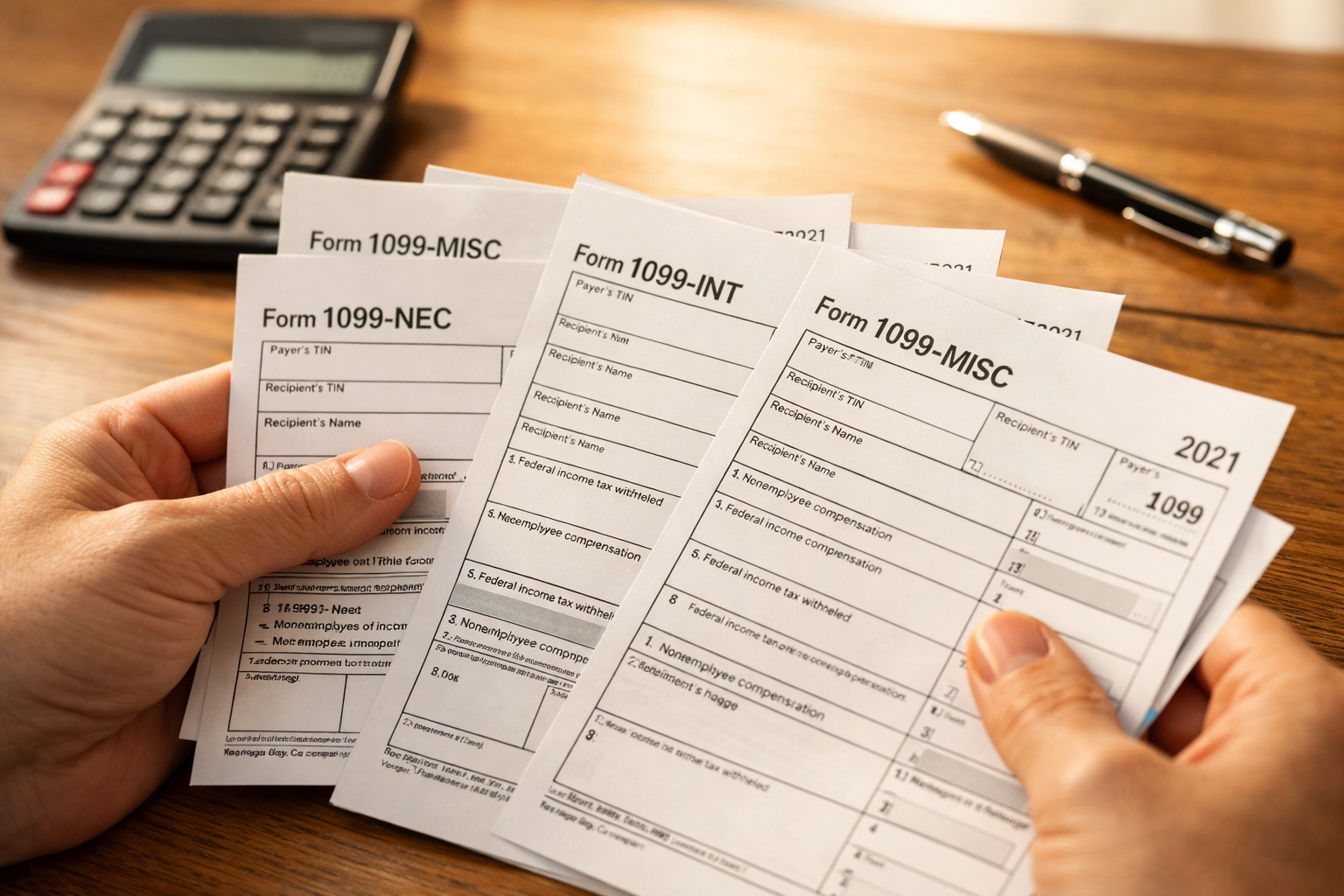
2. Treating 1099s Like They're Suggestions
The Mistake:
You did some freelance work last year. Made a few hundred bucks from that side hustle. Sold some stock. And you're thinking, "Do I really need to report this?"
Yes. Yes, you do.
About a third of Americans with side income don't report it, according to recent data. But here's what they're forgetting: the IRS gets copies of your 1099s too. They're matching their records with yours, and when things don't add up, you're getting a letter. Or worse.
How to Fix It:
Round up every 1099 form: 1099-NEC for contractor work, 1099-INT for interest, 1099-DIV for dividends, 1099-B for investment sales. All of them. Cross-reference these with your bank deposits and make sure everything's accounted for.
Don't guess. Don't estimate. Don't think "it's close enough." Use your actual records, and if something doesn't match, figure out why before you file. Set a reminder for mid-February each year to start collecting these forms, because they typically arrive between late January and mid-February.
For more help reconciling your 1099s (especially those tricky 1099-K forms), check out our guide to 1099-K reconciliation.
3. Playing Fast and Loose with Deductions
The Mistake:
That business dinner where you mostly talked about work? Deduction. The new outfit you wore to a client meeting? Deduction. Your daily commute to the office? Surely that's deductible, right?
Wrong. Very wrong.
The IRS has specific rules about what qualifies as a business expense, and "I use it for work sometimes" isn't one of them. Deducting personal expenses or non-qualified costs is a fast track to an audit and disallowed deductions.
How to Fix It:
Learn what actually qualifies. Business meals are 50% deductible when you're discussing business with clients or colleagues. Clothing needs to be specific to your work (uniforms, safety gear) and not suitable for everyday wear. Your regular commute from home to your main office? Not deductible.
Keep receipts for everything you deduct, and here's the crucial part: write a note on each one explaining the business purpose. "Lunch with Sarah to discuss Q2 marketing strategy" is infinitely better than just "restaurant." If you get audited, these notes are gold.
4. Missing Deductions You Actually Qualify For
The Mistake:
While some people deduct things they shouldn't, plenty of others miss legitimate deductions they've earned. Home office expenses. Retirement contributions. Education costs. Medical expenses. Startup costs for your business. Mileage you drove for work purposes.
You're leaving money on the table because you didn't know you could take it.
How to Fix It:
Do your homework. If you're self-employed, maxing out your retirement contributions isn't just good planning: it's a powerful tax deduction. Have kids? You might qualify for the Child Tax Credit or education credits. Work from home? That home office deduction could save you significant money if you qualify.
Track your mileage all year. Keep records of charitable donations. Save documentation for medical expenses that exceed a certain percentage of your income. Consider credits and deductions you might be overlooking.
Better yet, work with a professional who knows what to look for in your specific situation. We find deductions for our clients that they never would've known existed.
5. Ignoring Your Quarterly Payment Obligations
The Mistake:
You're self-employed, and you figure you'll just pay all your taxes when you file in April. Or you've got investment income and you're planning to settle up at year-end.
Then April comes, and surprise: you owe penalties and interest on top of your tax bill. Even if you pay everything you owe by the deadline, you still get hit with penalties because you were supposed to be paying quarterly.
How to Fix It:
If you're self-employed or have income that isn't subject to withholding, you need to make quarterly estimated tax payments. Mark your calendar for the four deadlines each year: mid-April, mid-June, mid-September, and mid-January.
Calculate what you'll owe based on your projected annual income, and make those payments on time. If your income varies throughout the year, adjust your quarterly payments accordingly. It's better to overpay slightly and get a refund than to underpay and face penalties.

6. Treating Taxes Like a One-Time Annual Event
The Mistake:
You think about taxes once a year: when you're scrambling to file. You're not planning ahead for next year. You're not adjusting your withholding when your life changes. You're not thinking strategically about timing income or expenses.
Tax planning isn't something you do in March and April. It's year-round work.
How to Fix It:
Start planning for 2026 right now. Review your withholding if you got a huge refund or owed a lot this year: that means your withholdings are off. If you got married, had a kid, bought a house, or started a business, update your W-4 with your employer.
Make strategic decisions throughout the year. Should you accelerate expenses into this year or defer income? Should you bunch charitable contributions? These questions can't be answered in April: they need to be addressed as they come up.
Think of taxes as an ongoing relationship, not a once-a-year panic attack.
7. Trying to Do Everything Yourself
The Mistake:
You've got a side business, rental property, investment accounts, and a complicated family situation. But you're determined to save money by doing your own taxes with that consumer software you bought for $79.
There's DIY spirit, and then there's penny-wise, pound-foolish. Complex tax situations require professional expertise, and mistakes in these situations are expensive.
How to Fix It:
Know when you're out of your depth. If you've got multiple income streams, own a business, have investment properties, experienced major life changes, or just feel overwhelmed, hire a professional.
A qualified Enrolled Agent or CPA doesn't just fill out forms: they find opportunities, catch mistakes before they become problems, and give you peace of mind. The money you spend on professional help often pays for itself in found deductions and avoided penalties.
At The Bean Counters, we work with people just like you who want their taxes done right. We catch the mistakes before the IRS does, find deductions you're missing, and handle the stress so you don't have to.
You've Still Got Time
April 15 is coming, but you're not out of time yet. Start gathering those documents today. Review last year's return to remind yourself what you needed. Set up systems so next year isn't this chaotic.
And if you're looking at this list thinking, "I'm making more than one of these mistakes," that's exactly why we're here. Our team at The Bean Counters specializes in untangling tax messes and setting people up for success. We've seen it all, fixed it all, and we're ready to help you get it right.
Need to get your books in order before tax time? Check out our guide on cleaning up your bookkeeping to avoid filing delays.
Don't let these common mistakes cost you money this year. You've got seven weeks. Let's make them count.